
On August 3, members of the University of Tennessee, Knoxville’s data community came together for the second annual institutional data conference, Data xUTK, a day dedicated to learning, collaboration, and innovation through data-informed practice.
Hosted by the Office of Institutional Research and Strategic Analysis, Data xUTK welcomed nearly 130 faculty, staff, and graduate students from across the university. The conference provided an opportunity for data practitioners representing a wide range of disciplines and functional areas to share ideas while strengthening connections with colleagues who are helping shape the institution’s future through data.
Featured Speakers and Presentation Highlights
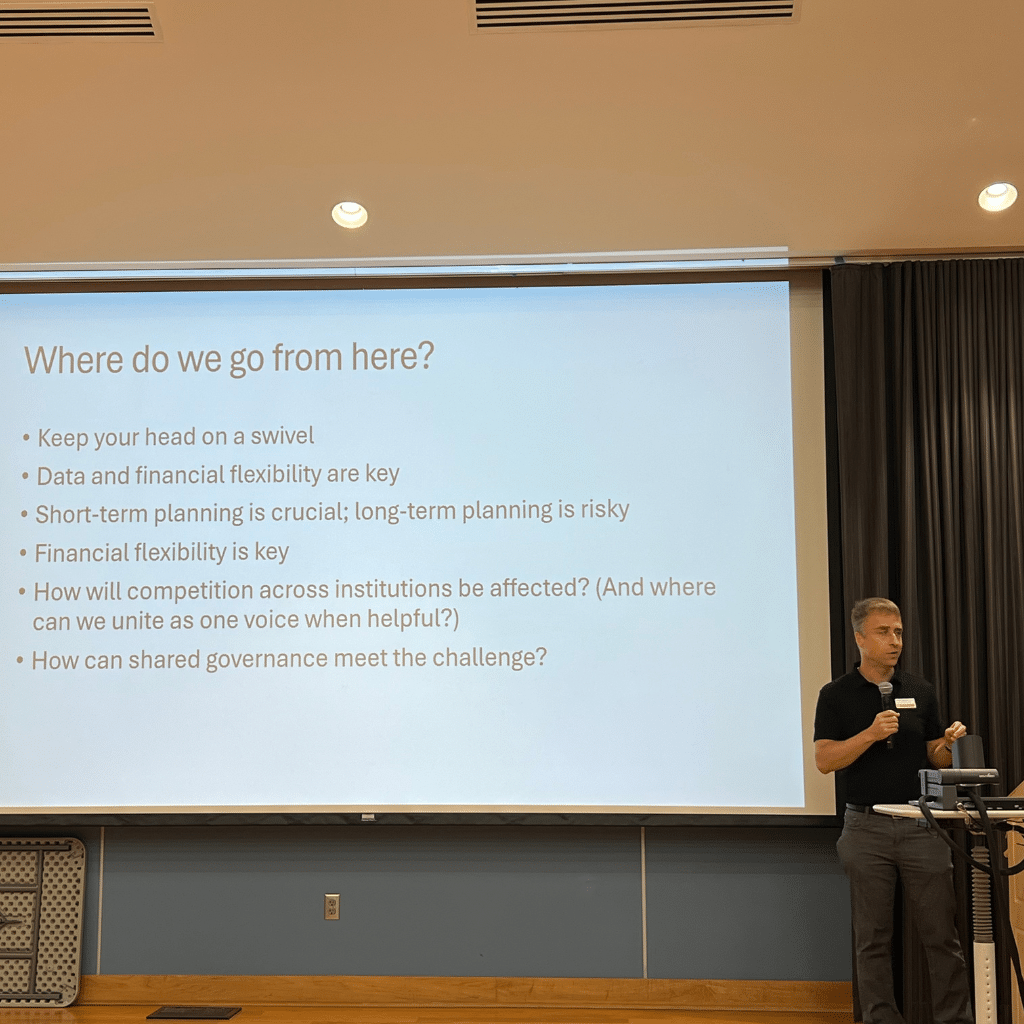
The day began with a keynote address from Dr. Robert Kelchen, who offered timely insights into the current landscape of higher education and the growing importance of data in supporting strategic decision-making. His remarks challenged attendees to consider the opportunities enabled by data-informed decision-making. He also emphasized the responsibilities that accompany this work.
Throughout the conference, participants engaged with peer-led presentations covering a variety of topics, including artificial intelligence and predictive analytics, student success and wellness initiatives, and assessment and accreditation efforts. These sessions highlighted the depth of expertise across campus. They also demonstrated how data are being leveraged to advance the university’s land-grant mission.

The conference concluded with a panel discussion featuring Dr. Katie Cahill, Dr. Lisa East, Dr. Javiette Samuel, and Dr. John Stier. Together, the panelists reflected on the evolving role of data in higher education. They also discussed how collaboration across departments and disciplines can create meaningful impact for students, faculty, staff, and the broader community.
More than a Conference
While the presentations and discussions were a central part of the day, Data xUTK was designed to be more than a conference. During the opening remarks, attendees were encouraged to think of Data xUTK as three things:
- A Stage: Data xUTK serves as a platform for members of the university’s data community to showcase their work. By sharing projects, tools, methodologies, and lessons learned, presenters help highlight the creativity, expertise, and innovation that support decision-making across campus.
- A Connector: Data xUTK creates opportunities for colleagues to meet, exchange ideas, and build relationships across organizational boundaries. Bringing together individuals who share a common interest in data helps strengthen the university’s collective capacity to solve problems and support institutional goals.
- A Catalyst: Data xUTK inspires new partnerships and future collaboration. The conversations that begin during the conference often extend well beyond a single day. These create opportunities for continued learning, resource sharing, and innovative cross-campus initiatives.
Building Bridges, Not Silos
At its core, Data xUTK reflects a commitment to a simple but powerful idea: building bridges, not silos. As the university’s data community continues to grow, collaboration and shared understanding will remain essential to transforming information into action.
The success of this year’s conference would not have been possible without the dedication and support of the planning committee, presenters, panelists, and attendees who contributed their time, expertise, and enthusiasm. Their efforts helped create an environment where learning, connection, and innovation could thrive.

As the university begins a new academic year, the relationships strengthened and ideas shared at Data xUTK will continue to support the ongoing work of building a more connected and data-informed campus community.